Main Spotlight: Creating Community Connections One Trolley Ride at a Time
Mobility plays an important role in economic vitality and community character. Learn how Monmouth and Independence, Oregon, created a free trolley to connect their downtowns.

Marion, Iowa © Tasha Sams
We work in collaboration with thousands of local partners and grassroots leaders across the nation who share our commitment to advancing shared prosperity, creating resilient economies, and improving quality of life.

Emporia, Kansas © Emporia Main Street
Made up of small towns, mid-sized communities, and urban commercial districts, the thousands of organizations, individuals, volunteers, and local leaders that make up Main Street America™ represent the broad diversity that makes this country so unique.

Chicago, Illinois © Main Street America
Looking for strategies and tools to support you in your work? Delve into the Main Street Resource Center and explore a wide range of resources including our extensive Knowledge Hub, professional development opportunities, field service offerings, advocacy support, and more!

Waterloo, Iowa © Main Street Waterloo
Your one-stop-shop for all the latest stories, news, events, and opportunities – including grants and funding programs – across Main Street.

Kendall Whittier — Tulsa, Oklahoma © Kendall Whittier Main Street
Join us in our work to advance shared prosperity, create strong economies, and improve quality of life in downtowns and neighborhood commercial districts.
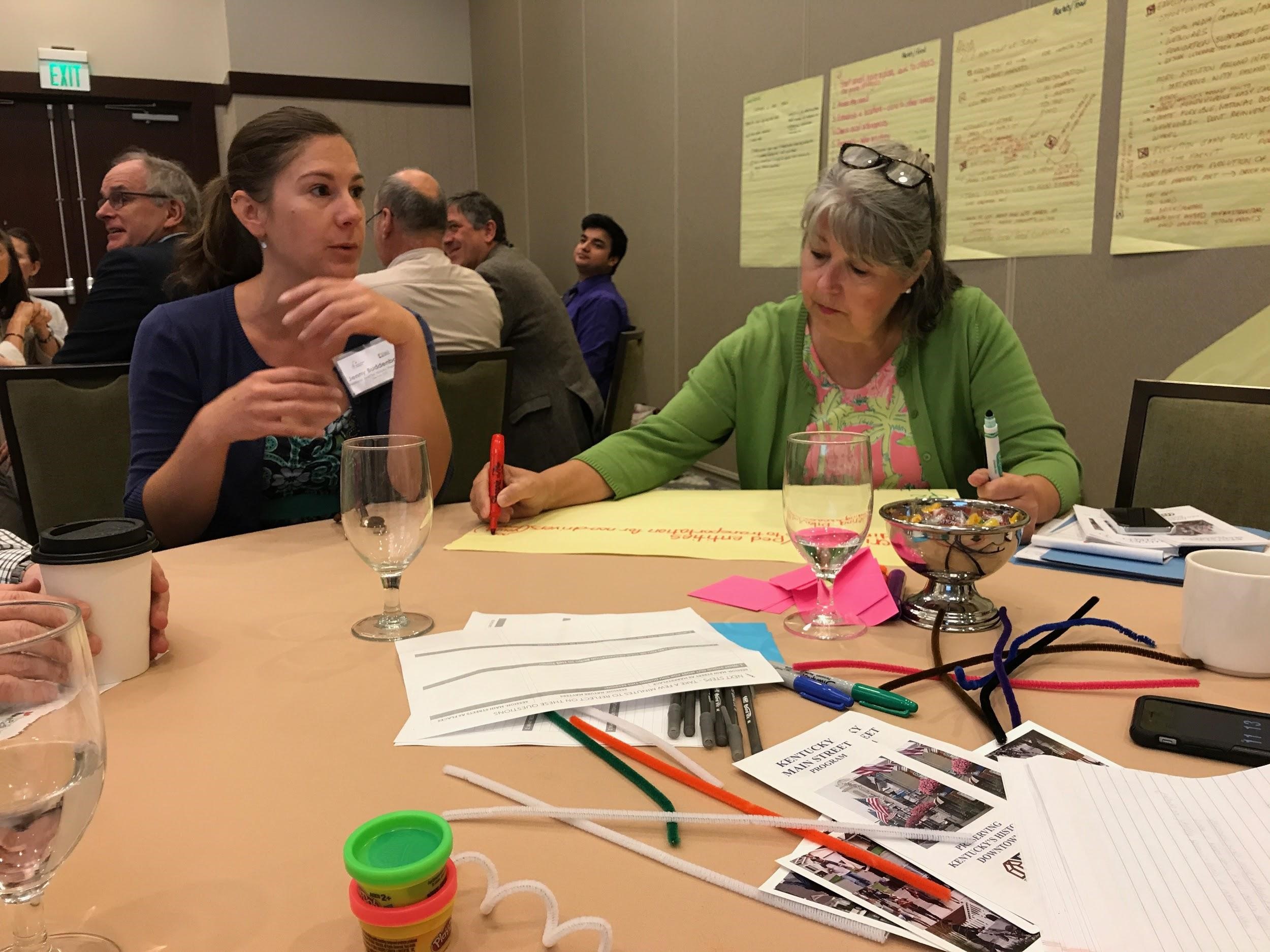
Photo credit: Project for Public Spaces
From walkability and transportation connectivity, to access to nature and availability of fresh food, place is inextricably linked to achieving positive health outcomes in rural America. Less explored, though perhaps equally powerful, is the connection between creating healthy places and economic development in America’s small towns.
This July 24-25, we hosted the Convergence of Health, Place, and the Economy in Denver, Colorado, with the Project for Public Spaces. This convening of nearly 50 of the country’s thought leaders from nonprofit planning and community development, transportation, health institutions, foundations, and government agencies was held to explore the intersection of place, health, and economic development in rural America.
With an emphasis on dialogue and interaction between participants, this convening was designed to create actionable agendas that advance health and prosperity on rural Main Streets. The three objectives of the convening were:
Convene and connect a diverse group of resource providers and experts.
Create inclusive and actionable strategies for rural main streets.
Establish shared values and engage in organic dialogue on the issues facing rural Main Streets.
The event was made possible by the generous sponsorship of Anne T. and Robert M. Bass.
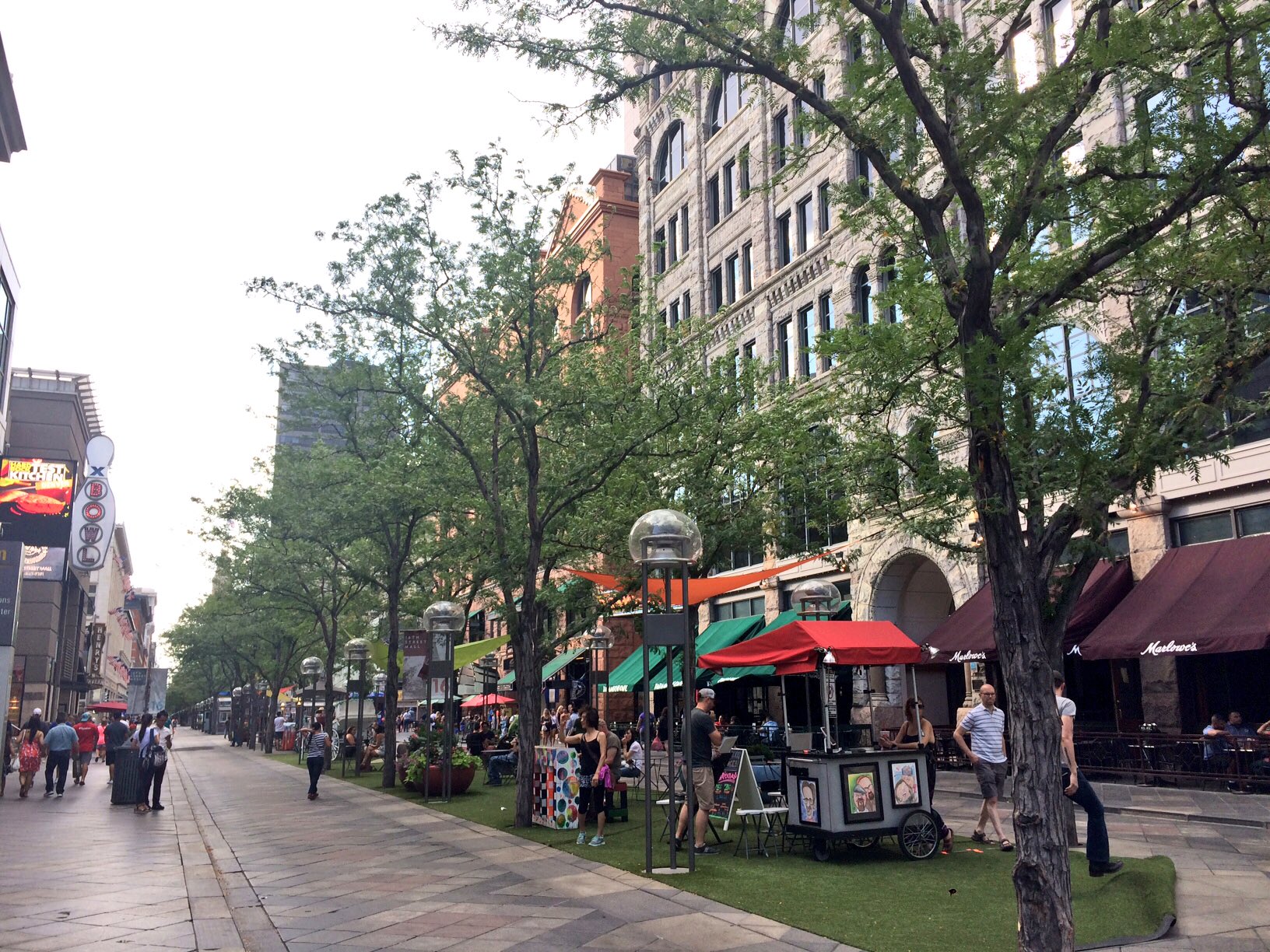
Denver streetscape. Photo credit: Lindsey Wallace, National Main Street Center
The convening began with keynote speakers Patrice Frey, Fred Kent, Matt Wagner, Richard Jackson, Jane Ellery, and Ed McMahon creating an atmosphere for transformative change around how to shape the nexus of the economy and health in rural America. Importance was placed on how, together, we can realize our collective potential to improve rural economies and health through placemaking.
Over the two days, participants discussed how to scale successes in three primary topic areas:
The event culminated in a collaborative process to develop actions, teams, and commitments in virtual learning opportunities, affinity groups, messaging, and creating a model for similar convenings at the local level.
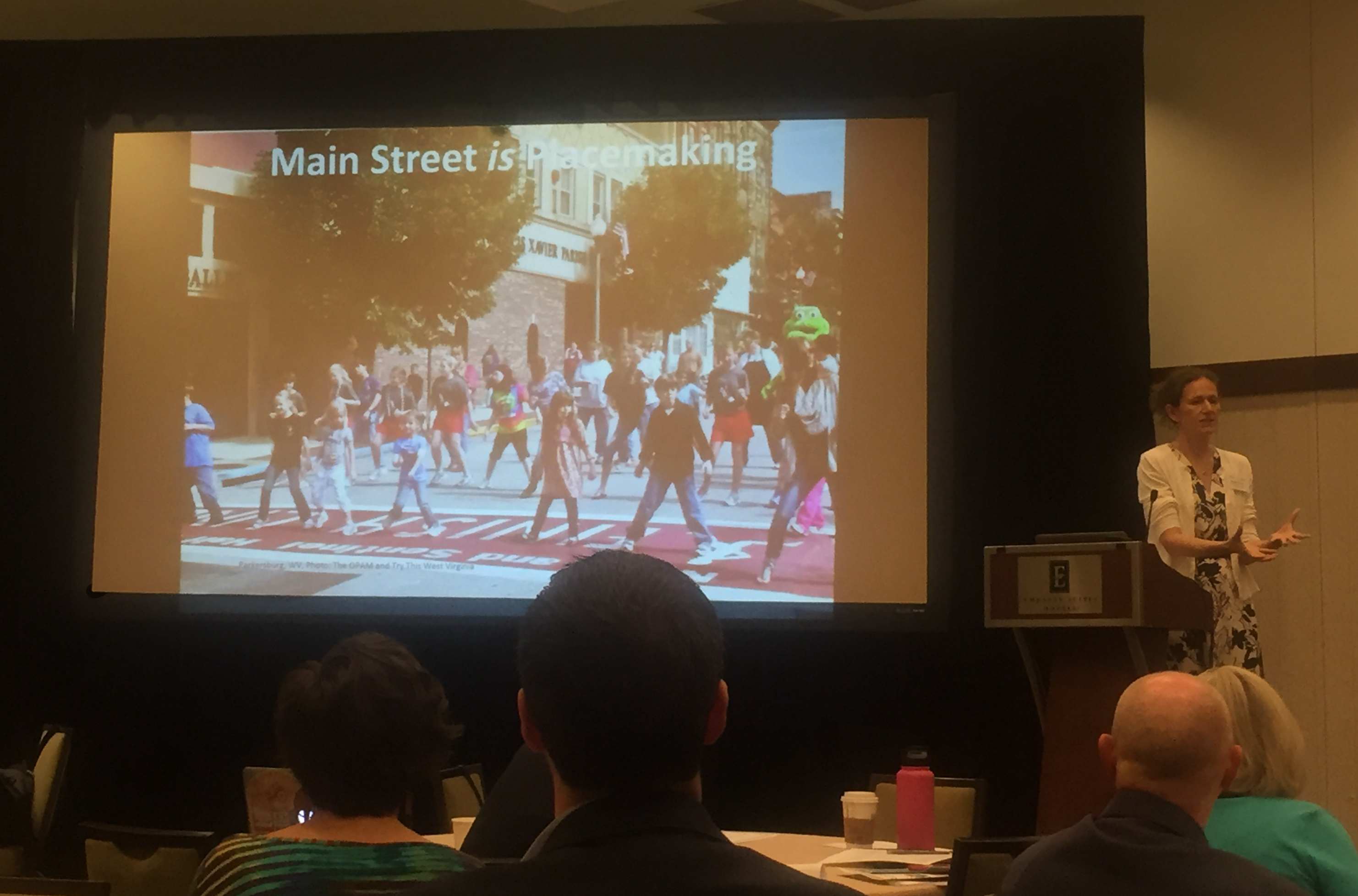
Patrice Frey, NMSC President & CEO, speaks at the convening. Photo credit: Rachel Bowdon, National Main Street Center
The following thought leaders from Main Street America, Project for Public Spaces, UCLA, Ball State University, and Urban Land Institute shared inspirational stories, the need for urgent action, and insights on the connection of place, health and the economy.
Patrice Frey, President and CEO, National Main Street Center
This convening is an opportunity to focus on what’s working in rural America in terms of health, place and economic outcomes. This is the first time there’s been a convening of this nature and it is a real opportunity to bust out of our silos and approach these challenges holistically. This is especially important because 75-80 percent of communities fall into the category of rural.
Fred Kent, President, Project for Public Spaces
All disciplines converge around place. Community organizing and improving places for people is one of the easiest things we can do. The tools to get there include Architecture of Place, Streets as Places, and Local Foods/Markets—all with the outcome of improving economic and health outcomes. “We can all do something we can’t believe.”
Matt Wagner, Vice President of Revitalization Programs, National Main Street Center
These are the conditions and trends we see impacting rural economies: struggles with population loss; shifts away from ag-based economy; more urban populations; all rural economies are not the same (western US is characterized by predominantly recreation-based economic sectors and southeastern is more manufacturing); youth outmigration, agriculture, and technology and automation. Trends like locally grown food changes Main Streets into culinary districts: we see farm to table restaurants, value-added production with retail components, and farmer’s markets as year-round retail anchors. About small scale production: because of the rise of the internet, online retail and globalization, this type of production has been able to occur and succeed in small town contexts.
Richard Jackson, MD MPH FAAP, UCLA Fielding School of Public Health
There are big economic forces pushing us in the direction of ill health—built environment, livability, opportunities to connect with nature. But connecting with one another can be a balancing factor. Basic healthcare and a healthy environment are rights. The purpose of public health is to fulfill society’s interest in assuring the conditions in which people can be healthy. “We can’t wag our finger at people and tell them to be healthy—what does work is to make it irresistible for people to get out be active, eat healthy, and enjoy their environment.”
Jane Ellery, Senior Fellow Project for Public Spaces, Ball State University
Community well-being takes a transdisciplinary approach: public and mental health, human resource and management, political science - all working together. Communities often don’t have the means to voice their concerns, but placemaking can facilitate that. Well-being is about moving away from preventing people from getting sick to helping people live fulfilling, happy, and healthy lives—it’s moving from a pathogenic to a salutogenic framework. We are working together to make physical activity an unavoidable part of our daily lives. “Place is as important to health as your genetic code.”
Ed McMahon, Urban Land Institute and National Main Street Center Board of Directors
The US spends the most in the world on healthcare but doesn’t necessarily get the best results. Rural healthcare, in particular, is a huge challenge. One-third of rural communities in America are gaining population and a healthy downtown is key to attracting people. While every community has different assets and challenges, to get the attention of public officials, healthy communities need to be linked to economic and/or community development. He stressed “The Economics of Uniqueness” and that differentiating your community through placemaking is incredibly important to your economic health as well as physical health.
In this themed section, three panelists discussed how markets impact access to healthy food and a vibrant economy in rural Main Streets, then attendees broke out into small groups for a deeper dive, facilitated discussion.
Presenters:
Guiding Question: How might we leverage food systems to encourage rural economic development?
Responses included:
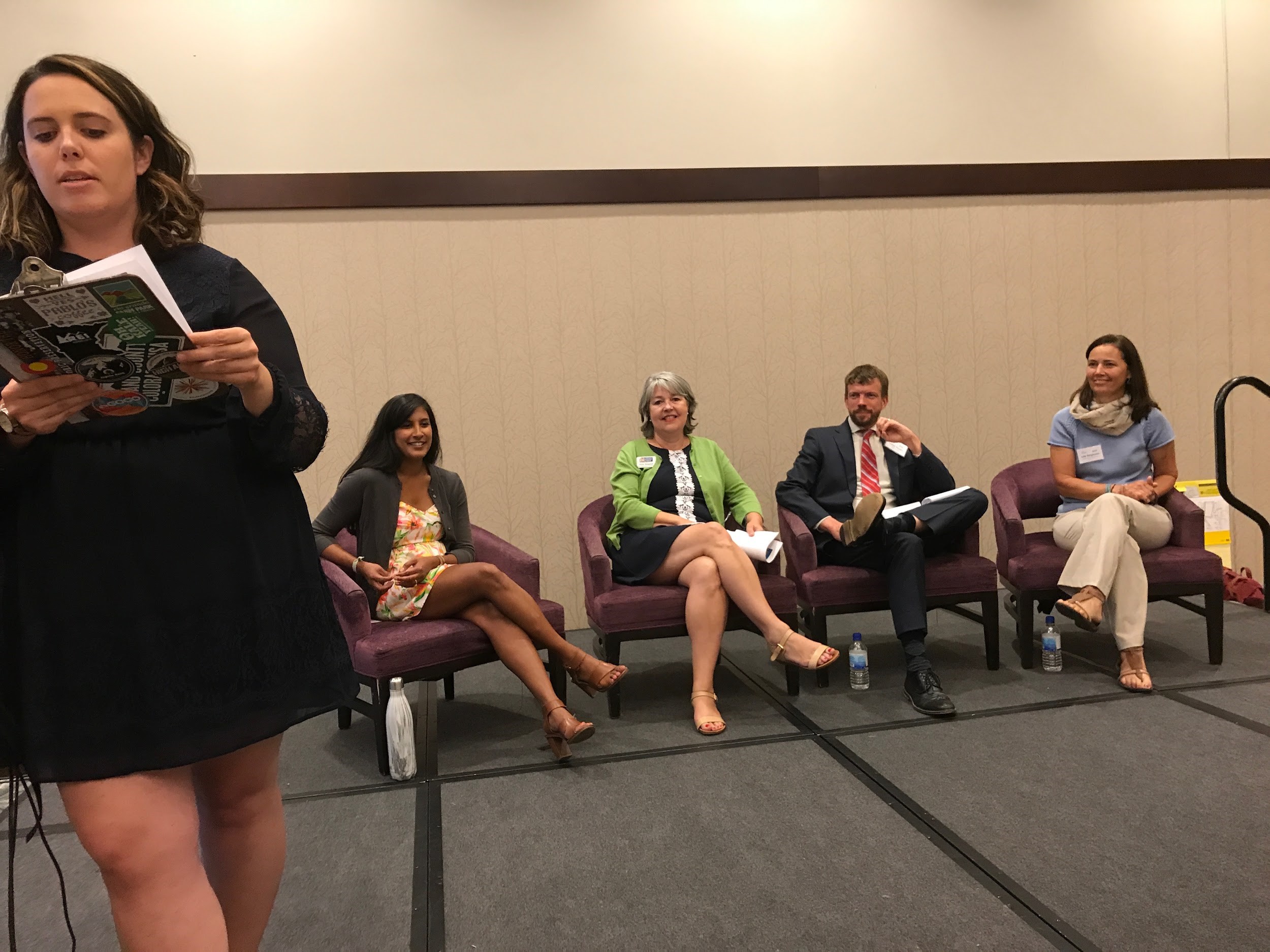
Nature Matters panel. Photo credit: Project for Public Spaces
Presenters
Discussion Summary
Guiding Question: How might we encourage community investment in green spaces?
Responses included:
Presenters
Discussion Summary
Guiding Question: How might we connect rural transportation and access to health?
Responses included:
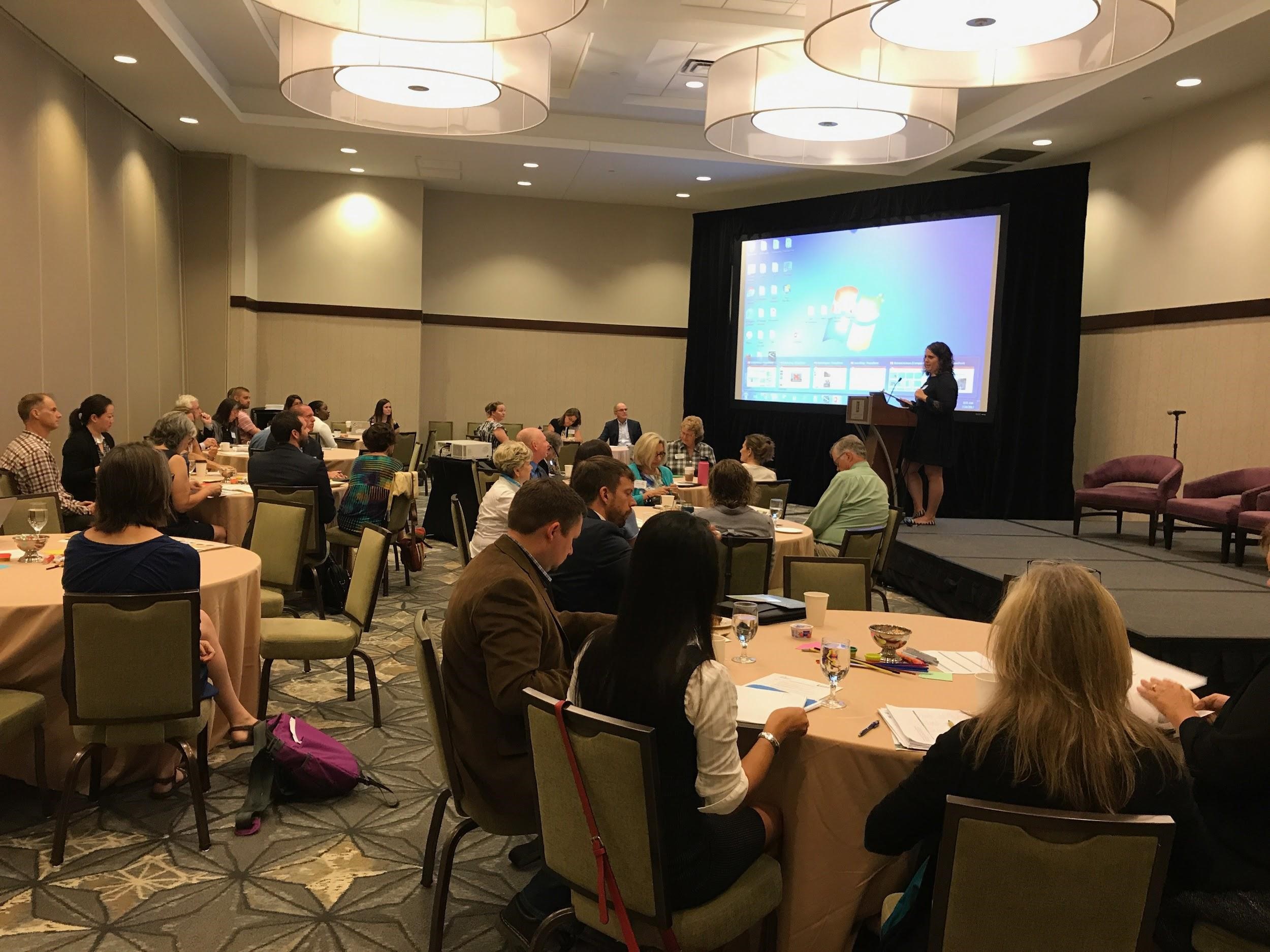
Photo credit: Project for Public Spaces
To emphasize the community-led approach to this convening, participants spent time in a facilitated discussion examining questions and ideas crucial to implementing health-related work:
The primary goal of this convening was for participants to begin to develop action agendas around themes that emerged during the meeting. While many ideas were exchanged related to building the capacity of rural Main Street managers and scaling the placemaking projects yielding positive health and economic outcomes, four areas for action emerged. Participants self-selected into one of the following discussion groups:
Virtual learning forum. Establish a virtual learning forum community that allows us to go forward outside of physical convenings.
Affinity groups. Establish community typologies and provide opportunities to connect with communities who are similar.
Messaging. Establish shared language on intersections of health/place/economy.
Replicable program or convening model. Create a model for local convenings on the convergence of health, place, and the economy that replicate the work done here.
Work continues on the identified action agendas—stay tuned for more information about how to get involved or how you could further the work started in Denver! The Project for Public Spaces and the National Main Street Center are also working on a summary report, which will include details surrounding each of the presentations and discussions.
Thank you to the following organizations for attending:
America Walks
American Planning Association
Ball State University
City of Lamar
City of Montrose
Colorado Department of Public Health and Environment
Colorado Department of Transportation
Colorado Development Office
Colorado Main Street
Community Builders
Community Resource Center
U.S. Economic Development Administration
Edington Associates, LLC
Fielding School of Public Health, UCLA
Iowa Economic Development
KaBoom!
Kentucky Heritage Council
Land Information Access Association
LiveWell Colorado
Main Street South Carolina
Main Street West Virginia
Mary Black Foundation
Montana Main Street
Montana State University
Nashville Civic Design Center
National Main Street Center
National Trust for Historic Preservation
Project for Public Spaces
Rails to Trails
Red Tail Conservancy
Safe Routes to School
Telamon, Inc.
Tennessee Department of Health
Trust for Public Land
USDA-Rural Development
Mobility plays an important role in economic vitality and community character. Learn how Monmouth and Independence, Oregon, created a free trolley to connect their downtowns.
Insights from the Thriving Communities Toolkit about how you can build partnerships to advance your transportation goals.
Catalytic projects can transform communities. Learn how Lee's Summit, Missouri, built the Green Street Market as an anchor institution to bring people together and invest in their future.


